Optimize eCommerce on Mobile for a Winning Omnichannel Experience

eCommerce on mobile is becoming the leading retail space for consumers as mobile-first, and in many cases mobile-only, shopping becomes the new standard. In fact, the percentage of mobile payments by U.S. consumers increased from 8% to 28% in five years, from 2018 to 2023.1
As technology evolves, so do consumer behaviors, and it’s clear that the preference to pay and shop with smartphones is here to stay. For example, mobile in-stream video is part of one of the fastest growing internet advertising segments for businesses to build revenue.2
That means an intelligent mobile strategy is a necessity—not only for successful eCommerce businesses, but also as an essential part of building a winning omnichannel experience. From basic mobile optimization to shoppable brand apps that offer a custom experience, there are several ways to optimize your eCommerce presence.
Mobile site design is vital for seamless eCommerce
Responsive web design has become a necessity over the past decade, as it allows websites to reformat automatically based on screen size. Given mobile’s growing popularity, however, it makes sense to go a few steps beyond simply ensuring a responsive site. An optimized mobile design with fraud control—complete with cutting-edge, EMV specification-based payments technology like Three Domain Secure (3DS), Secure Remote Commerce (SRC), and Stored Token Services—is the ultimate goal.

Experienced web developers can help design a mobile-optimized site that caters to the smartphone-browsing experience. Think large, easy-to-tap navigation buttons and streamlined menus for a fast, frictionless checkout experience. In addition, elements such as photos and blog posts often stack on top of each other on mobile sites, rather than side by side, as they often appear on a desktop screen. Stacking allows for a cleaner view on small screens, while maintaining the quality of the browsing experience.
Mobile-optimized sites emphasize functionality and simplicity, rather than cramming as many elements as possible into a small display. If elements are too small to make an impact and buttons are too small to be easily clickable, visitors will become frustrated and leave.
Speed is critical to keeping online shopping attention
Users want information fast. In many cases, they’re on the move or multitasking on their smartphones—so distractions abound. That’s one reason easy-to-read, easy-to-swipe features are the name of the game in mobile-optimized design.
Page load times are also incredibly important to the user experience, whether on a computer or on a mobile device. If pages load slowly, users may lose patience and move on. Fortunately, reducing page load times can increase conversions—and a total site overhaul isn’t necessary to get there. Simply reducing the number of images and page elements on each page might help them load faster.
When selecting elements for web pages, it helps to be discerning about what needs to be there. Does a product page need 10 photos or will five do the job just as well? Image size and resolution are equally important. A single high-resolution file will take longer to load than 10 medium-resolution ones.
The same principle applies at checkout, where speed and clarity are even more critical. Continuous A/B testing of payment flows can reveal what displays of payment methods, button placements, and even button sizes make checkout faster and easier for customers. Just as with images, less clutter and more intuitive design can help reduce friction—ensuring shoppers complete their purchase before attention drifts elsewhere.
Mobile apps can make a big difference for customer experience
A mobile-optimized site is one thing. For large eCommerce enterprises, going farther by building a mobile app is likely to pay off in the long run. In fact, a recent survey found that 81% of consumers agreed that their favorite brand has a useful smartphone app.3 A brand app is a controlled environment, enabling features and incentives that encourage shoppers to return time and again. Creating an in-app loyalty program, for example, could encourage customers to check back often to
access special deals and promotions.
Major brands also use apps to offer their customers multiple ways to shop and pay, including BOPIS (buy online, pickup in-store). Plus, apps allow brands to offer flexible payment methods, including contactless and digital wallets, which is increasingly important as contactless payments via mobile wallets are a growing consumer preference. According to one recent study, 28% of consumers prefer using digital wallets to pay online.4

For small eCommerce businesses, however, the pros and cons of building an app are a bit less clear. Smaller businesses may be better off investing in mobile site optimization, as shoppers could be more likely to find their site through search engines—rather than downloading an app.
Alternatively, there are many SaaS mobile app services that can make it easier to create a templated app in lieu of building a completely customized one from scratch. There is also the option of a progressive web app (PWA), which acts as a bridge between websites and apps. A PWA can run in a browser like an ordinary website, but it offers app-like experiences, adapting to the capabilities supported by different devices. This ultimately helps to reduce friction in the payment funnel,
creating a smoother eCommerce experience without having to install an app.
If designed well, brand apps can be incredibly powerful for generating customer relationships and driving conversions. As mobile eCommerce continues to rise, and as people become increasingly accustomed to shopping in apps, a brand-centric mobile space can significantly raise the profile of an eCommerce business.
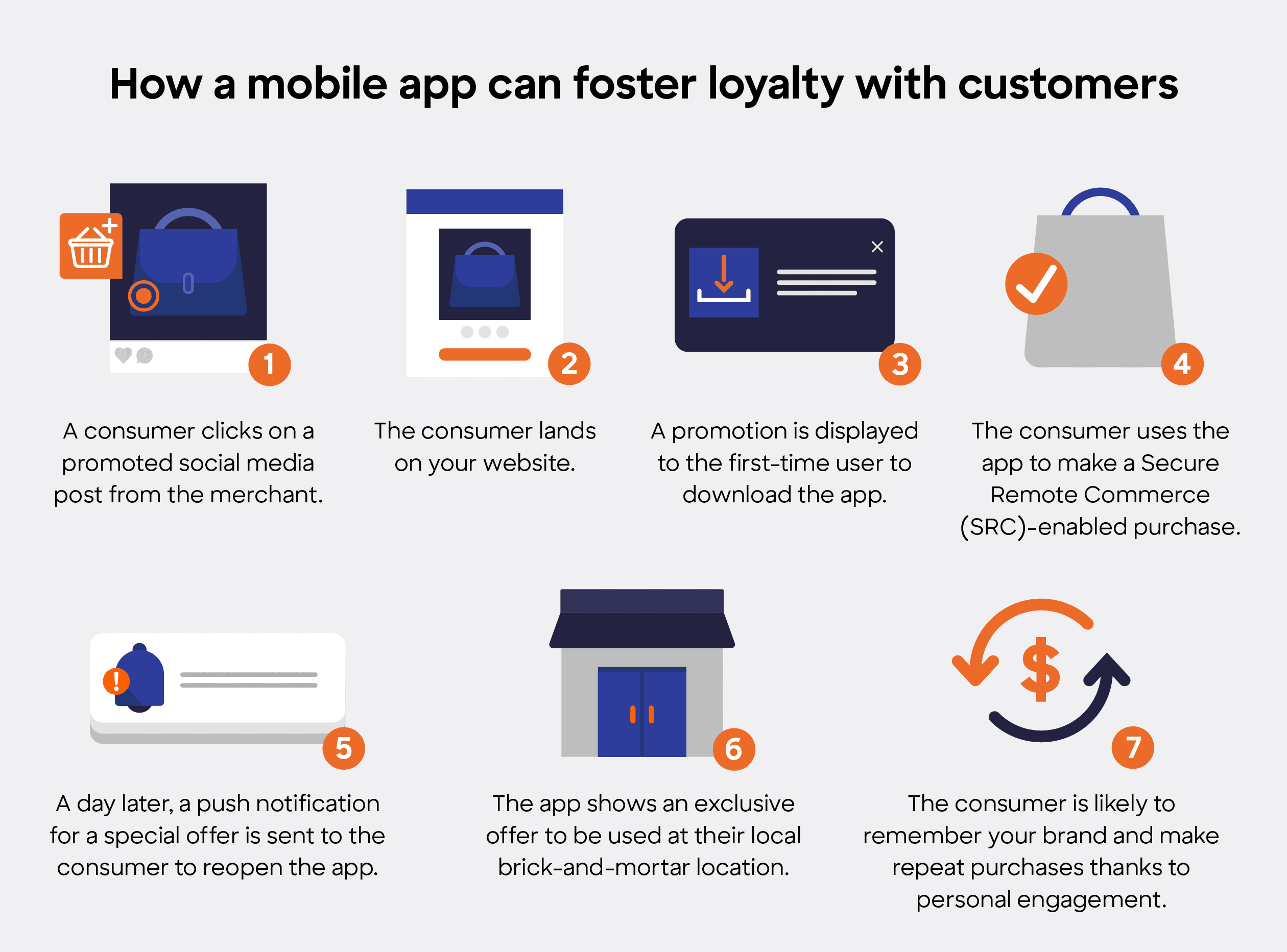
Best practices for a brand mobile app approach
Apps can effectively tie together the omnichannel experience, particularly for businesses with brick-and-mortar stores. A dynamic app connects the threads between the online and in-person elements of business strategy, helping drive people from all points in the funnel toward conversion—but only if it provides an experience that’s familiar and enjoyable to the customer.
That means providing features like well-timed push notifications, localization functions, and email and social media integrations. For example, best practices like using hashtags and responding to comments are crucial for engaging customers. But a frictionless checkout is just as important.
Advanced technology can help give customers the kind of secure, convenient payment experience they’ve come to expect. For example, the new solution, Tap to Own, enables consumers to make an eCommerce purchase by tapping their physical card on their own device. Tap to Own reduces not only fraud risks associated with card-not-present transactions, but also removes the fees associated with such transactions by treating an eCommerce purchase like a card-present transaction.
The big picture of omnichannel optimization
Ideally, the different elements of a company’s omnichannel strategy will complement one another for a powerful eCommerce experience. But this is only the beginning.
Maintaining customer loyalty and attracting new customers will depend on integrating social media, customer service at brick-and-mortar locations, and payment best practices into one high-conversion omnichannel strategy.
Learn more about how Discover® Network can help enhance eCommerce for omnichannel.
- Green, C. Federal Reserve Bank of Atlanta. (2024, June 3). The Mobile Pay Juggernaut Rolls On. Take On Payments. Retrieved 27 October, 2025.
- PWC Global. (2025, July 24). Perspectives from the Global Entertainment & Media Outlook 2025–2029: Unleashing Agility in a Rapidly Changing World. Retrieved 27 October, 2025.
- Adobe. (2024). Reimagining customer journey management. Adobe for Business. Retrieved 06 January, 2026.
- S&P Global Market Intelligence 451 Research, Global Consumer Survey, commissioned by Discover Network, Q1-Q2
2025.