From Wallet to Wrist: The Evolution of Wearable Payments
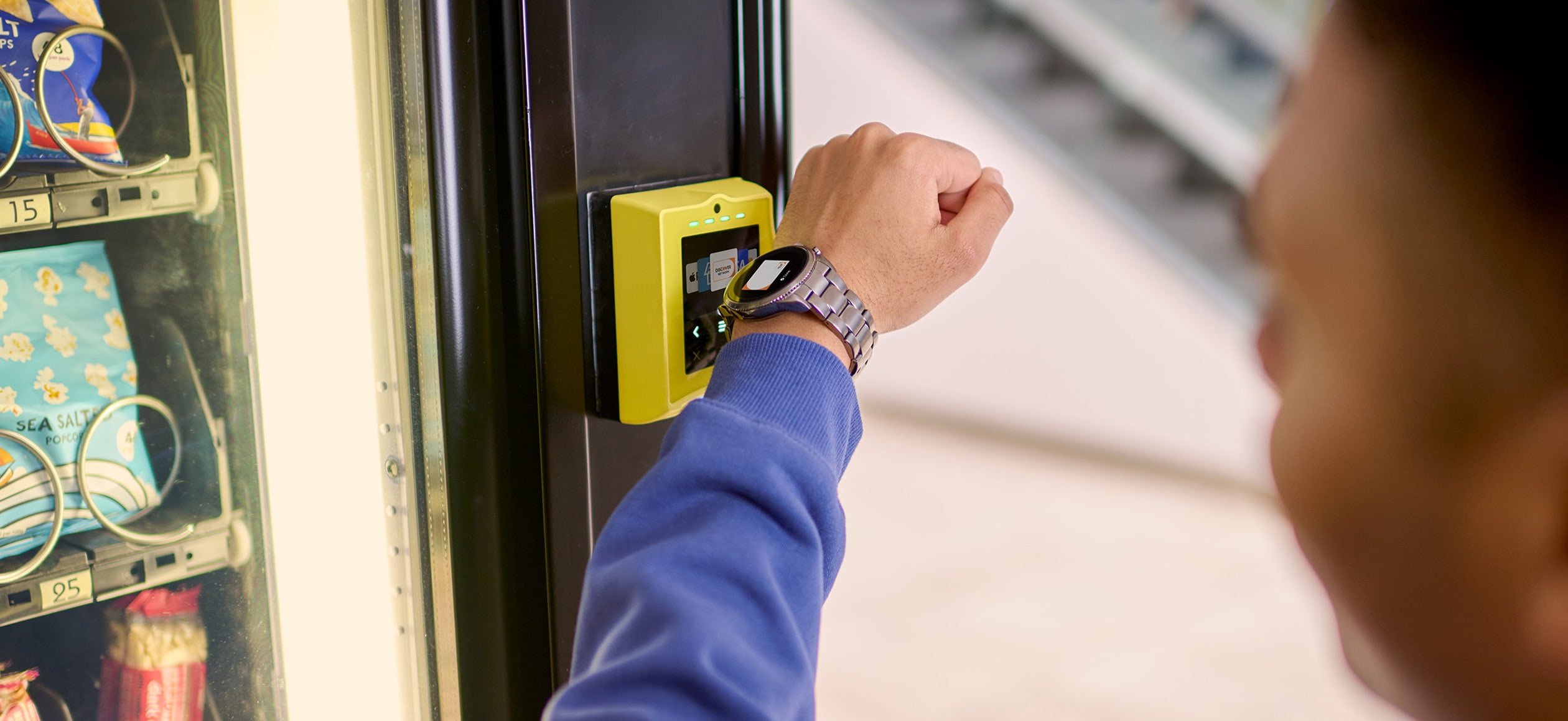
With consumers’ preference for everything contact-free, wearable payment technology has found momentum. Everything from payment-enabled jewelry, key fobs, and fitness bands to stickers and cuff links (and, of course, phones) has gained popularity around the world as consumers discover how easy it is to use this technology.
Battery-free devices—known as passive wearables—have also infiltrated the world of fashion, with clothing and jewelry brands getting in on the action alongside technology brands. For example, various smart rings enable contactless payment features for consumers on the go. New designs for bracelets and cuff links include payments technology, while interactive sensors are being woven into jackets and pants.
Technology makes it possible
For merchants, understanding the growing trend of wearable payments is key. The path of adoption for these new devices kicked off more than a decade ago with the rise of wearable tech, such as fitness trackers, and the introduction of smart watches. While fashions and trends can lead to mixed marketing results for the uptake of different products, consumer acceptance overall has grown with a surge in the appeal for many devices.
As consumer comfort has increased over the years, so has the potential for payment-enabled devices. With technology such as D-PAS Connect from Discover® Network, consumers can carry or wear their favorite payment methods while leaving their cards and wallets at home. By partnering with the network, merchants can incorporate the flexibility needed to accommodate this payments trend.
Today, these passive wearables are finding uses for payments in resorts and hotels, campuses, amusement parks, cruise ships, transit, music festivals and concerts, and sporting events, and a recent survey found that 55% of merchants worldwide view payments as a highly strategic area of focus that drives competitive differentiation.1
The same survey showed that digital wallets—which use the same technology as passive wearables to enable contactless payments—are a top priority for merchants. In fact, 66% of merchants surveyed rated digital wallets as “highly important” when weighing the overall cost of acceptance with the impact on customer experience and conversions; an additional 29% rated them as “somewhat important.” Consumer preferences and behaviors are driving the rise in contactless payments, with 61% of consumers worldwide stating they’ve used digital wallet technology over the past 90 days.2

Even without traditional banking relationships, consumers can enjoy stored-value flexibility. For travelers and tourists, or the unbanked or underbanked population, which represents a significant portion of consumers in many countries, these reloadable options can be key. Consumers simply locate a participating merchant or stand-alone kiosk and insert cash, and the cardholder can top off the value on the device or accessory. For consumers without a bank account, or for those who prefer not to link them, these reloadable devices provide a convenient payment alternative.
D-PAS Connect from Discover Network is a solution that enables passive wearables to go beyond payments. By combining functionalities, consumers are able to access hotel rooms, loyalty sign-ins, concert tickets, transit passes, and more. Shops, restaurants, hotels, and entertainment venues can provide guests with enhanced services and product options by embedding payment and other offers into various devices.
Are consumers ready?
The adoption of these new payment capabilities is growing worldwide with 60% of consumers globally stating they prefer a contactless form factor according to survey data.2 Popularity differs from region to region, however. For example, consumers in the U.S. have remained more reluctant to embrace the technology, with 39% of U.S. consumers still preferring to insert or swipe their card at checkout.2
New horizon for merchant opportunities
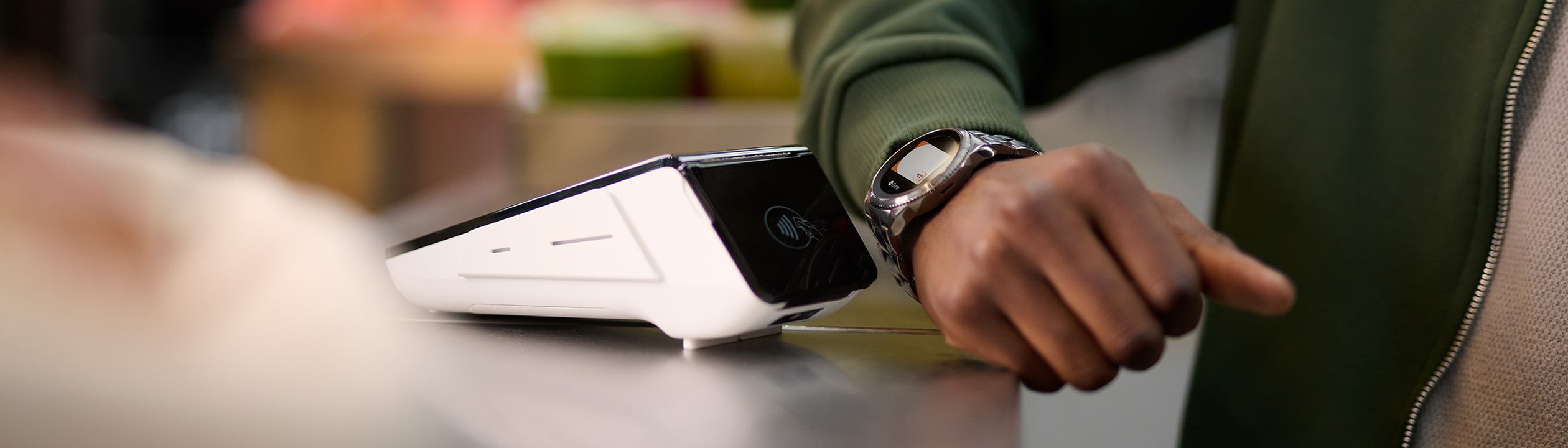
New payment wearables not only provide convenience for consumers, but they also offer merchants a new way of capturing and retaining customers. To stay competitive, merchants must recognize the payment trends that drive customer preferences. For example, surveyed consumers reveal that the ability to pay using their preferred payment method is a top factor in purchase decisions.2 With the rise in wearable payments, merchants working closely with a payments network partner can help ensure their capabilities are ready.
The benefits are many. In addition to expanding payment and marketing methods, the information gleaned from customer transactions provides issuers and merchants with smarter insights from consumer behavior. By tying purchase data from payment-enabled wearables into loyalty offerings and cross-selling incentives, marketing efforts can be expanded to open further opportunities to generate sales. These carry-everywhere objects—embedded with identification and individual account data—allow merchants to incentivize customers in real time at checkout.
With so many new payment alternatives, merchants can also provide point-of-sale (POS) options that don’t require customers to stand in line for a fixed terminal. Employees working in-store, at kiosks, or at outdoor retail stands can accept payments using either a commercial off-the-shelf (COTS) device—such as a mobile phone or tablet—or a non-commercial
off-the-shelf device designed specifically for merchants. Both device options enable fast, secure EMV-compliant transactions, consistent with traditional terminals.
The future of payments
As payment technology advances in both convenience and security, the possibilities for creative and increasingly attractive payment options will grow. New devices, platforms, and applications—and, ultimately, increased acceptance—are in the works. These new customer journeys, made faster and simpler through wearable payment methods, will continue to set new customer expectations.
As consumers become more accustomed to wearable technology, merchants should prepare now to take advantage of tomorrow’s consumer behavior. By working closely with their payment partners, merchants can capture the opportunity that exists within this growing trend. Ensuring the acceptance of payments—in the style and manner that consumers prefer—can be an effective way to deliver the experience that customers want.
- S&P Global Market Intelligence 451 Research, Global Merchant Survey, commissioned by Discover Network, Q1-Q2 2025.
- 451 Research and Discover Network Consumer Fintech Global Survey, 2024.
The information provided herein is sponsored by Discover® Network. It is intended for informational purposes, and is not intended as a substitute for professional advice.